
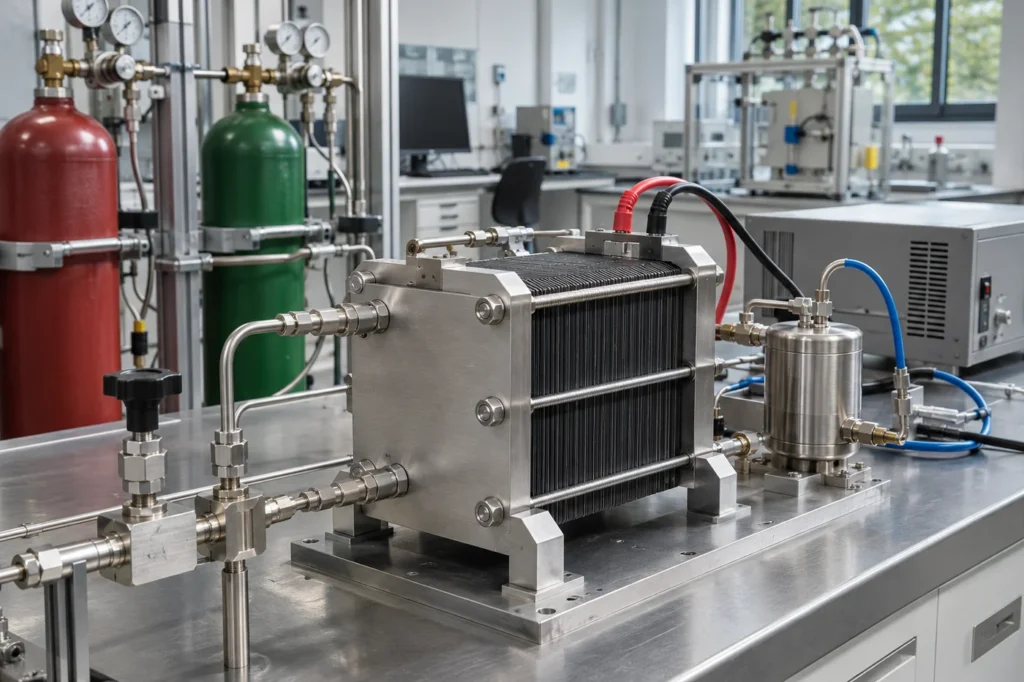
Hydrogen is already an industrial feedstock in ammonia and refining. The clean-energy opportunity is to replace emissions-intensive production and, where technically justified, introduce hydrogen into hard-to-electrify processes. India’s renewable resources and industrial clusters offer potential, but delivered hydrogen cost is more important than electrolyser nameplate capacity.
Market evidence and growth indicators
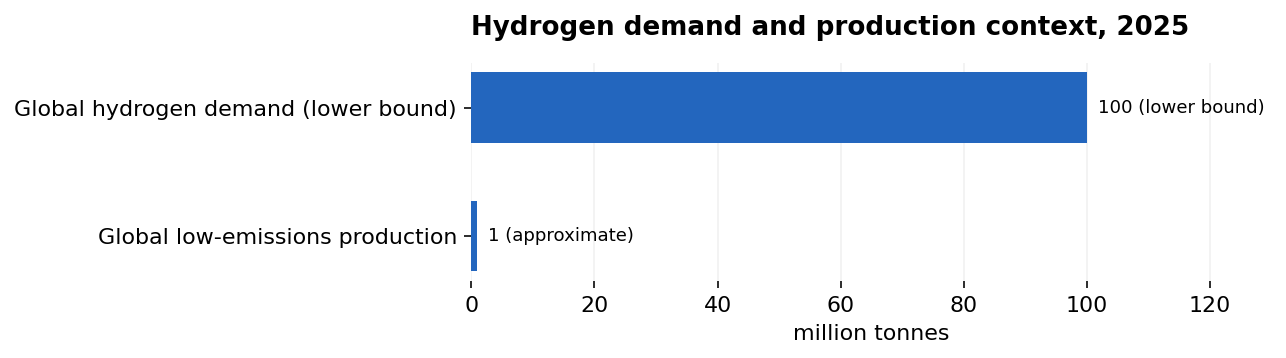
The IEA reports global hydrogen demand surpassed 100 million tonnes in 2025, predominantly in established industrial uses. Low-emissions hydrogen production was around one million tonnes. India’s National Green Hydrogen Mission aims for annual capacity of at least five million tonnes by 2030.
| Indicator / period | Value (million tonnes) | Data status |
|---|---|---|
| Global hydrogen demand (lower bound) | 100 | lower bound |
| Global low-emissions production | 1 | approximate |
Technology and industry direction
Electrolysis converts electricity and water into hydrogen, but the cost and emissions depend heavily on electricity sourcing and plant utilisation. Fertiliser and refinery demand can provide initial markets, while low-carbon steel and hydrogen derivatives may create new ones.
Alkaline and PEM electrolysers split water using electricity; their operating flexibility, material requirements and maintenance differ. A complete plant includes water purification, rectification, gas separation, drying and safety systems. Compression, storage and transport add energy and capital costs. Fuel cells convert hydrogen back to electricity with application-dependent efficiency.
Business and engineering opportunities
Electrolyser components, rectifiers, water treatment, gas purification, leak detection, compressors and industrial integration are relevant engineering opportunities. Developers need reliable offtake contracts and credible emissions accounting.
Suppliers can target power conversion, sensors, valves, control systems, water treatment and balance-of-plant equipment. Early customers may be industrial users replacing existing hydrogen rather than speculative transport projects. Offtake agreements and renewable power availability should be evaluated before committing capital.
Challenges and outlook
The five-million-tonne figure is a target, not current output. Renewable electricity cost, water availability, transport infrastructure and buyer willingness to pay remain commercial barriers.
Measure commissioned production capacity, actual output, electricity sourcing and verified emissions intensity. India’s five-million-tonne target is a policy ambition, not achieved output. Engineering roles include electrochemistry, process control, materials and hazardous-area safety.
Connect with the industry at Edgeline Expo 2027
Edgeline Engineering & Innovation Exhibition 2027 invites businesses, researchers and engineering institutions working in hydrogen energy to explore product demonstrations, potential customer engagement and industry–academia collaboration from 26–29 January 2027 at Pune International Exhibition & Convention Centre (PIECC), Moshi, Pune. Explore exhibition opportunities.
References
- https://www.iea.org/reports/global-hydrogen-review-2026/executive-summary
- https://www.iea.org/news/middle-east-crisis-exposes-vulnerabilities-in-global-hydrogen-supply-chains-as-low-emissions-alternatives-struggle-to-ramp-up
- https://www.pib.gov.in/PressNoteDetails.aspx?ModuleId=3&NoteId=160593&lang=2®=48
- MNRE National Green Hydrogen Mission